
Published July 2, 2026 · By Chris Nevada, Nevada Real Estate Group · NV License S.181401
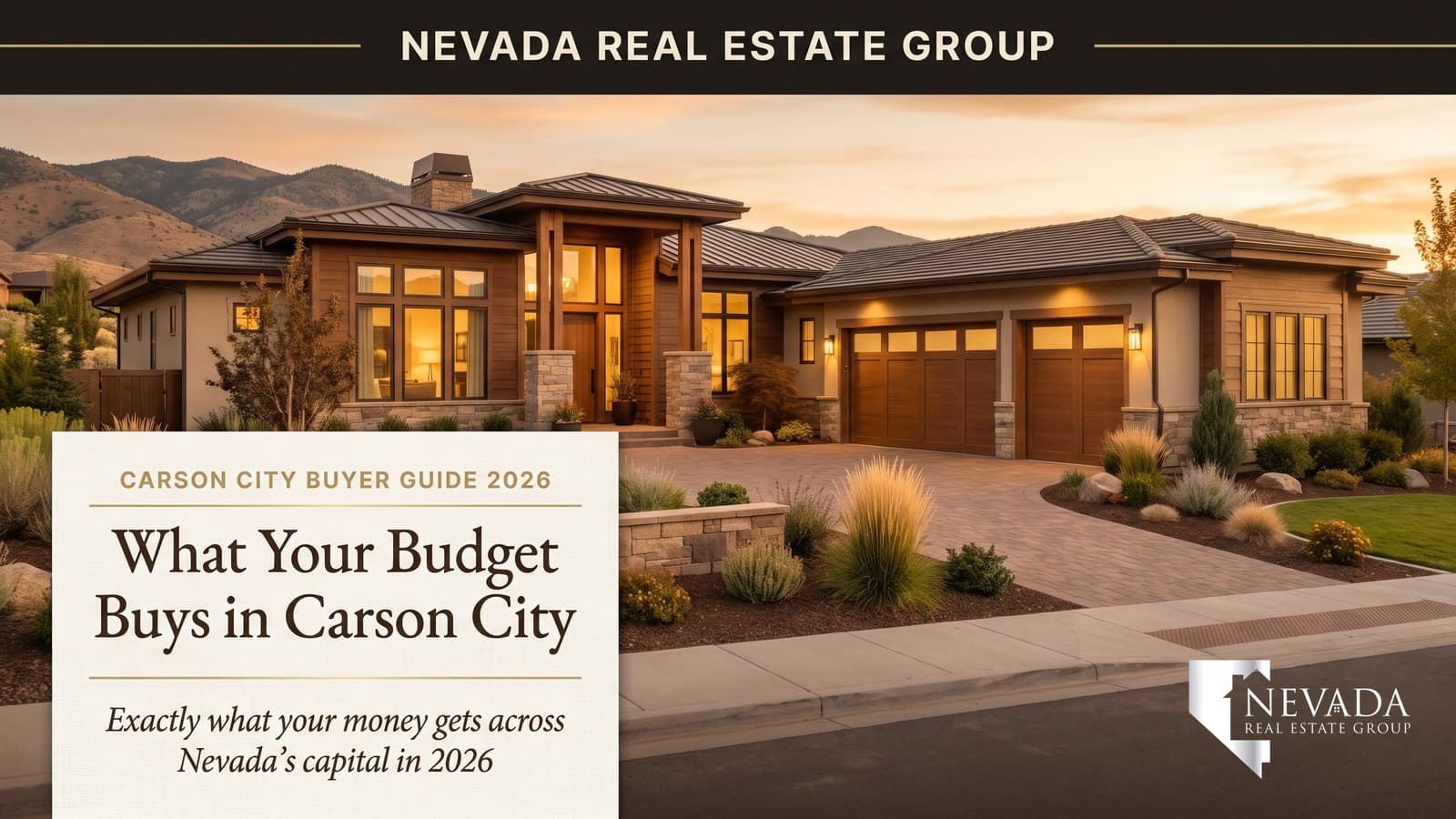
"What will my budget buy in Carson City?" is the first question most buyers ask me, and it is the right one — because Nevada's capital is a distinct, smaller market where the same dollar figure buys a very different home depending on which part of the city you shop. In 2026 the median Carson City home sits around $480,000, and that number gets you a newer home in a northwest foothill subdivision, a larger older home on the east side, or a charming historic home near the Capitol. This guide walks exactly what your budget buys by area, then shows how the picture shifts at $390,000 and $580,000.
The median Carson City home costs about $480,000 in 2026 and typically buys a roughly 1,700 to 2,100 square-foot, three-bedroom single-family home. In newer northwest and south subdivisions that means near-new construction; on the east side it buys a larger older home; in the historic west side it often buys character over square footage. Area, age, and lot are the levers you trade against a fixed budget. Call (775) 277-2120.
- The 2026 Carson City median of about $480,000 buys a 3-bed home of roughly 1,700 to 2,100 square feet.
- Carson City is Nevada's capital, about 30 minutes from both Reno and Lake Tahoe.
- The newest construction clusters in the northwest foothills and south-side subdivisions.
- Adding $100,000 (to about $580,000) typically adds 400 to 700 square feet, acreage, or Sierra views.
- Nevada charges no state income tax, which stretches every dollar of a Carson City housing budget.
How we know this: Across the 9,600+ closings Nevada Real Estate Group has represented statewide — more than $4.85B in closed volume — we work the Northern Nevada market including the capital region every week, so we see what a Carson City budget actually buys. In my experience, buyers who name their single top priority first — newest, biggest lot, or historic character — get far more for $480,000 than buyers who try to maximize everything at once. The figures below reflect that transaction experience plus 2026 market data; confirm current comps for your target area before you write an offer.
What Is the Median Home Price in Carson City in 2026?
According to Nevada REALTORS, whose members cover the capital-region market, the median price of an existing single-family home in Carson City sits near $480,000 in 2026 — a bit below Reno, reflecting Carson's smaller size and quieter, capital-city pace. Just as important are the conditions around the number: homes have been selling close to list price with a median time on market often in the 45-to-60-day range, a touch slower than the bigger metros, which gives buyers real negotiating room on the right listing.
We've worked buyers through this price point across the capital region, so treat the median as a starting budget, not a house. The real question is what you trade for it — and in Carson City, the biggest trade is newer-foothill versus larger-established. Carson also draws a distinct buyer: state employees who want a short commute to the Capitol complex, retirees relocating for Nevada's tax advantages and slower pace, Sparks and Reno commuters seeking a quieter base, and Lake Tahoe workers priced out of the lake who want to stay within a half-hour drive. Each of those buyers weighs the trade-offs differently, which is why I anchor the search to your specific priorities before we ever look at listings — the capital's smaller inventory rewards a focused search over a scattershot one.
| Area | Typical home | Approx. size | Age | Trade-off |
|---|---|---|---|---|
| Northwest foothills | 3 bed single-family | 1,700–2,100 sq ft | 2000s+ | Views over size |
| South Carson subdivisions | 3–4 bed single-family | 1,800–2,300 sq ft | Newer / new build | South-end location |
| East Carson | 3–4 bed single-family | 1,900–2,300 sq ft | 1980s–2000s | Older finishes |
| Historic west side | 2–3 bed historic | 1,300–1,800 sq ft | Older / historic | Charm over space |
| North Carson | 3 bed single-family | 1,600–2,000 sq ft | Mixed | Near freeway corridor |
| Rural outskirts | Smaller home on acreage | 1,400–1,900 sq ft | Varies | Land over house size |
The pattern is consistent: the newer foothill and south areas buy Sierra views and modern finishes, while the established east side and rural edges buy more square footage or a parcel of land at the same budget. Deciding which of those matters most to you is the single biggest step toward spending your Carson City budget well. Explore the capital region on our Carson City hub, and compare against nearby Reno and the wider Northern Nevada communities directory.
What Does $480,000 Buy in the Newer Foothill and South Subdivisions?
In the newer areas — the northwest foothills and the south-side subdivisions — the median budget buys newer construction, often a home built in the last twenty years or a brand-new build with builder incentives. Expect a three-to-four-bedroom home of roughly 1,700 to 2,300 square feet, an attached garage, a low-maintenance yard, and contemporary finishes, with foothill lots often adding Sierra Nevada views. According to the Nevada Department of Taxation, most of the capital's newer residential development has concentrated in these foothill and south submarkets.
The trade-off in the foothills is size for setting: a view lot may mean a slightly smaller home for the money, while the south subdivisions trade a longer drive to the historic core for newer, larger homes. For buyers who value modern finishes, a warranty, and either views or square footage, this is the strongest use of the median budget. Compare current new-build options on our new construction hub, and read our Reno relocation guide if you're weighing the wider region.
What Does $480,000 Buy in Established East Carson?
Shop east Carson and the established central neighborhoods, and $480,000 stretches to more square footage, often 1,900 to 2,300 feet, sometimes on a larger lot with mature landscaping you will not find in the newer foothill subdivisions. Many of these homes date to the 1980s and 1990s and may want updates, but the value is real and the location is convenient to shopping, the hospital, and state offices.
I steer value-focused buyers here when they want maximum space for the money and are comfortable trading brand-new construction for an established neighborhood, with a sensible plan to update the home gradually over time. According to the U.S. Census, Carson City's population is stable and slightly older than the state average, anchored by government, healthcare, and retiree households, which keeps demand for established family homes steady. Weigh these areas on our Carson City hub before deciding.
What Does $480,000 Buy on Carson City's Historic West Side?
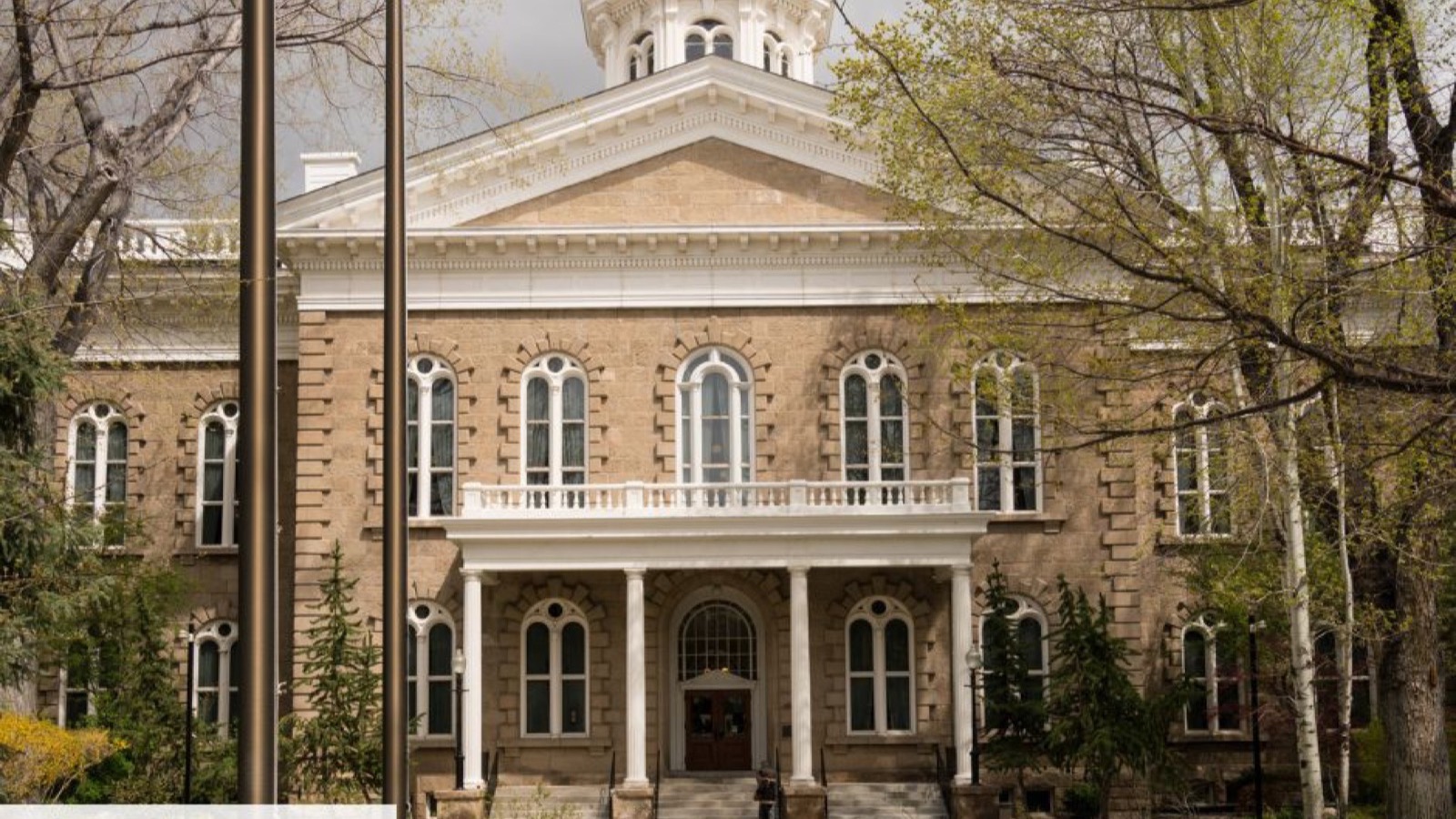
On Carson City's historic west side — the tree-lined streets near the Capitol and the Governor's Mansion — the median budget changes shape. Here $480,000 typically buys a smaller, older home rich in character rather than a large modern house, with craftsman and early-twentieth-century architecture, mature trees, and walkability to downtown that newer areas cannot match. You are buying history and setting, not square footage.
I bring the west side into the conversation for buyers who prioritize character, walkability, and a true sense of place over size or modern finishes. These homes often need ongoing maintenance and thoughtful updates that respect their age, so budget accordingly. According to the Federal Housing Finance Agency, the region has posted solid long-run appreciation, and well-kept historic homes in desirable pockets tend to hold value on their scarcity. Explore comparable settings across the region on our luxury communities page.
How Does the Price Ladder Change What You Get in Carson City?
The median is just one rung. Move up or down about $90,000 to $100,000 and the home changes materially. The ladder below shows how the typical Carson City home shifts across three price points at 2026 pricing.
| Budget | Typical home | Size | Best-fit buyer |
|---|---|---|---|
| about $390,000 | Condo, townhome, or older single-story | 1,200–1,600 sq ft | First-time / budget |
| about $480,000 (median) | 3-bed single-family | 1,700–2,100 sq ft | Move-up / typical |
| about $580,000 | 4-bed newer, view lot, or acreage | 2,200–2,800 sq ft | Growing family / move-up |
Notice how much leverage that step carries. Dropping to $390,000 usually means an attached home or an older single-story; stepping up to $580,000 often adds a bedroom, 400 to 700 square feet, a Sierra view lot, or a parcel of land on the outskirts. According to Freddie Mac rate data, small mortgage-rate movements swing your buying power by tens of thousands of dollars, so getting pre-approved before you shop tells you which rung you are actually on.
Should You Buy New Construction or Resale in Carson City at the Median?
Both work at $480,000, and the right answer depends on what you value. New construction in the foothills or south subdivisions gets you a modern floorplan, a builder warranty, energy efficiency, and 2026 incentives like rate buydowns and closing credits — sometimes with a view lot. Resale in east Carson or the historic west side gets you more square footage or more character, but older systems and finishes.
| Factor | New construction (about $480K) | Resale (about $480K) |
|---|---|---|
| Location | Foothills / south subdivisions | East Carson / historic west side |
| Size for the money | Moderate, new | Larger or characterful |
| Condition | Brand new, warrantied | Older, may need updates |
| Incentives | Builder rate buydowns / credits | Seller concessions possible |
| Character / views | Foothill views possible | Mature trees, historic charm |
In my experience, buyers who prioritize a move-in-ready modern home lean new, while buyers who want space, character, or a central location lean resale. Carson City's smaller inventory means the right home in your target area may not appear every week, so I keep buyers ready to move when it does. Both paths deliver genuine value here; the decision usually comes down to whether you want new-and-efficient in a foothill or south subdivision, or established-with-character on the east or historic west side.
What Does It Cost to Own a Median Carson City Home Each Month?
Purchase price is only the start — your real cost is mortgage principal and interest, property taxes, insurance, and any HOA dues. According to the Nevada Department of Taxation, Nevada taxes property on assessed value with statutory abatement caps that keep the tax line moderate, and there is no state income tax per the Nevada Department of Taxation. On a $480,000 home with roughly 10 to 20% down at 2026 rates, most buyers land somewhere in the high-$2,000s to low-$3,000s per month all-in, before HOA — and many Carson City homes carry no HOA at all.
Here is a concrete example. On a $480,000 home with 10% down, you finance about $432,000. At a 2026 conventional rate, principal and interest land near $2,750 a month, property taxes add roughly $240, homeowners insurance about $125, and mortgage insurance perhaps $150 until you reach 20% equity — before HOA. With no HOA, you are near $3,265 all-in; put 20% down instead and you drop the mortgage insurance entirely and shave the principal, pulling the payment back toward the high $2,000s. Those savings, multiplied across a 30-year loan, are exactly why I model the full picture — and Carson City, like the rest of Northern Nevada, carries real winter operating costs a warmer market does not, so I fold heating and snow-season upkeep into the conversation.
How Much Income Do You Need to Buy a Median Carson City Home?
A common rule of thumb is that your all-in housing payment should stay near or below about a third of your gross income, though lenders qualify many buyers higher. On a $480,000 home, once you factor principal, interest, taxes, insurance, and any HOA at 2026 rates, most households need somewhere in the range of roughly $110,000 to $140,000 in annual income to qualify comfortably with a moderate down payment — less if you put more down or carry little other debt, more if rates are elevated.
The good news is that Nevada's lack of a state income tax stretches every dollar of that income further than it would across the state line in California. According to the U.S. Census, Carson City's economy is anchored by state government, healthcare, and a strong retiree base, which supports steady demand at the median even without the rapid growth of the bigger metros. I always start buyers with a real pre-approval so we anchor the search to what you actually qualify for. Our buyer resources walk through the affordability math step by step.
What Down Payment and Loan Options Work in Carson City?
You do not need 20% down to buy a median-priced Carson City home. Conventional loans allow as little as 3 to 5% down, FHA loans allow 3.5% with more flexible credit, and VA loans offer qualified veterans zero down — a meaningful benefit given Northern Nevada's veteran and government-employee population. On a $480,000 home, that is the difference between roughly $14,400 and $96,000 up front, which is often the real constraint for buyers, not the monthly payment.
The trade-off with a lower down payment is mortgage insurance and a slightly higher monthly cost until you build equity, so we model each scenario against your cash reserves and timeline. According to the Consumer Financial Protection Bureau, comparing loan estimates from multiple lenders can save borrowers thousands over the life of the loan, so never take the first quote. A larger down payment removes mortgage insurance, but tying up cash you may need for the realities of Northern Nevada homeownership — snow removal, heating, and the occasional roof or furnace repair — is its own trade-off I walk buyers through.
Which Carson City Neighborhoods Offer the Most for the Median Budget?
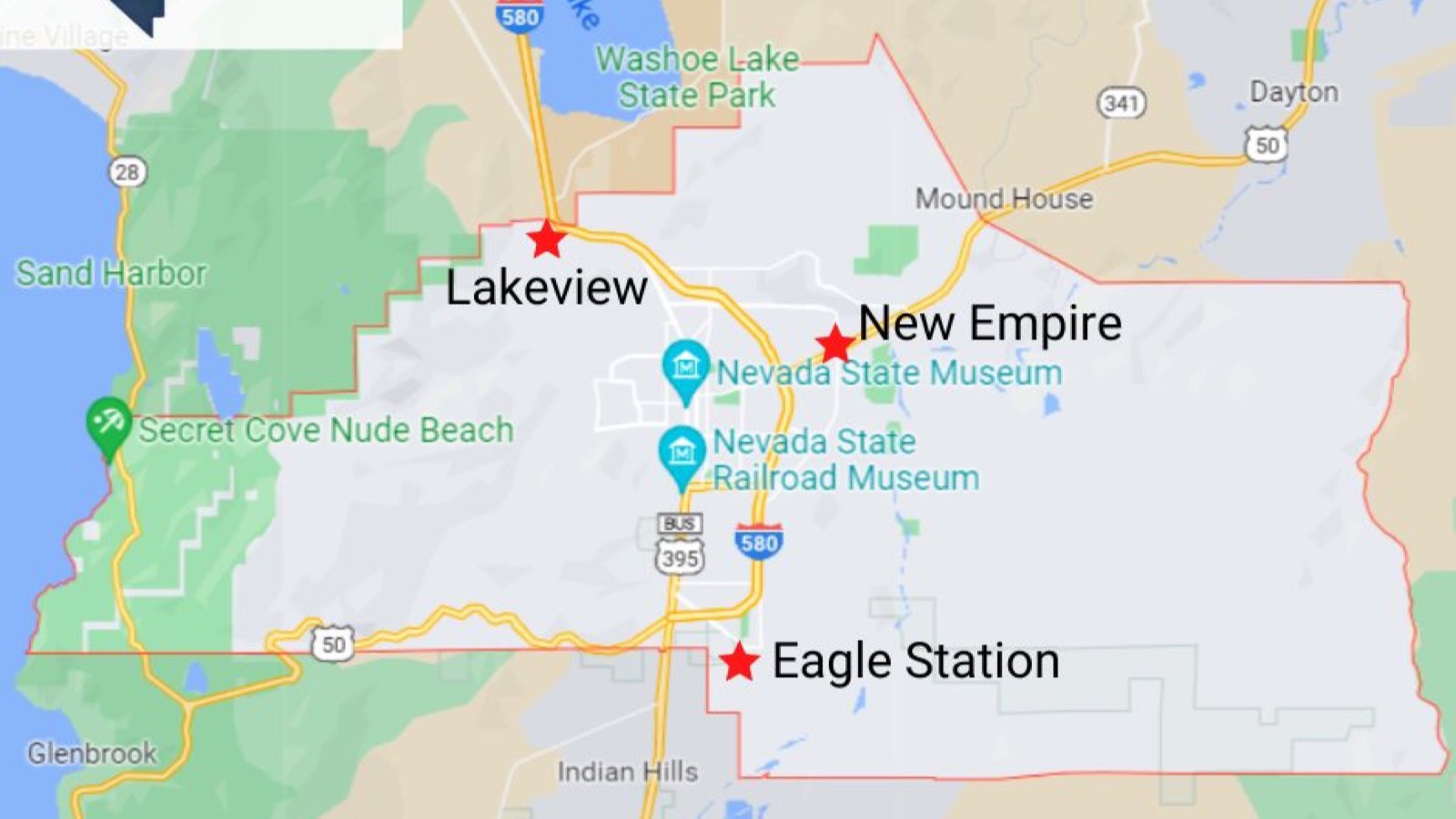
A few areas consistently deliver the most for around $480,000. The south-side subdivisions offer newer, larger homes for the money, trading a longer drive to downtown for square footage. East Carson stretches the budget on established space and convenience. The northwest foothills trade some size for Sierra views and modern finishes, and the rural outskirts trade house size for land.
The historic west side stretches the budget least on size but most on character and walkability near the Capitol. According to Nevada REALTORS, Carson City's smaller market moves at its own pace, so the best value shifts with each new listing rather than on a big-metro rhythm. I keep a live read on what is coming to market. Browse the area on our Carson City and Northern Nevada communities hubs, or start a home search filtered to your budget.
How Fast Do Median-Priced Homes Sell in Carson City?
Speed matters when you are shopping the median, and Carson City moves a little differently than the bigger metros. According to Nevada REALTORS, homes have generally been selling close to list price with a median time on market often in the 45-to-60-day range in 2026 — balanced, with real negotiating room, because the buyer pool is smaller than Reno's or Las Vegas's. Well-priced, well-presented homes in desirable areas still move, but you are less likely to face the frantic multiple-offer scrambles of a larger market.
There is a seasonal rhythm to it as well. Spring and summer bring the most inventory, while the snowier winter months slow down and hand patient buyers more leverage. In my experience, the bigger challenge in Carson City is inventory, not competition — the right home in your target area may not appear every week, so I keep pre-approved buyers ready to act when it does. That preparation matters more here than raw speed, because the perfect listing can be worth waiting for in a smaller market.
Carson City's demand story is steadier than the boom-and-bust cycles of the bigger metros, which is part of its appeal. State government is a stable, recession-resistant employer, the healthcare sector keeps growing with the region's older population, and the capital's proximity to both Reno's job base and Lake Tahoe's recreation gives it a durable draw. Many buyers arrive from higher-cost states and are struck by how far their income stretches once Nevada's lack of a state income tax is factored in, and retirees in particular appreciate the walkable historic core and the slower pace. That balanced, steady demand is why I tell median-budget buyers here to focus on buying the right home in the right area rather than trying to time a dramatic price swing that this market rarely produces.
What Mistakes Should Carson City Budget Buyers Avoid?
The most expensive mistake I see is shopping on price alone and ignoring the all-in monthly cost and condition. Two $480,000 homes can carry very differently once you add an older home's insurance, heating, and repair costs, or the maintenance an historic west-side property demands. The second mistake is stretching to the top of your pre-approval and leaving no cushion for updates, which older Carson inventory often needs.
A third trap is under-weighting the winter and the well-and-septic realities of some rural-outskirts properties, which differ from city-serviced homes. I push buyers to weigh location, utilities, and condition against raw size and price. Finally, do not skip the inspection to win a bid — with older inventory especially, a modest inspection fee can surface a five-figure problem. If you also need to sell a current home to fund the move, our seller resources cover timing the two transactions.
How Do I Find the Right Median-Priced Carson City Home?
Start by getting pre-approved so you know your true budget and monthly comfort level, then pick your one non-negotiable — newer construction, a Sierra view, historic character, or acreage. From there we narrow to the two or three areas where that priority is affordable at $480,000 and watch the best current inventory in each. Because Carson City's inventory is smaller, readiness matters more than speed: come pre-approved with a clear priority list so you can act when the right home appears.
The buyers who do best at the median treat $480,000 as a set of trade-offs to optimize, not a single house to find. Carson City rewards patience and preparation because the perfect listing does not come along every week. As the lead brokerage serving Northern Nevada, Nevada Real Estate Group works the capital region for buyers at exactly this price point. Call our team at (775) 277-2120, or contact us to see current median-priced inventory that fits your must-haves.
Frequently Asked Questions
What is the median home price in Carson City in 2026?
The median price of an existing single-family home in Carson City is about $480,000 in 2026, according to Nevada REALTORS data — a bit below Reno, reflecting the capital's smaller size and quieter pace. Homes have generally been selling close to list price with a median time on market often in the 45-to-60-day range, giving buyers real negotiating room in a market with a smaller buyer pool than the larger metros.
What does $480,000 buy in Carson City?
At the median, $480,000 typically buys a three-bedroom single-family home of roughly 1,700 to 2,100 square feet. In newer northwest foothill and south subdivisions that means near-new construction, sometimes with Sierra views; on the east side it buys a larger older home; on the historic west side it buys character and walkability over square footage; on the rural outskirts it can buy a smaller home on acreage.
Is Carson City cheaper than Reno?
Generally, yes. Carson City's median runs modestly below Reno's, reflecting its smaller size and quieter, capital-city character. At the same budget you often get a comparable or slightly larger home in Carson City, in exchange for a smaller market, fewer amenities, and a roughly 30-minute drive to Reno's larger job base and airport. Many buyers value the trade for the slower pace.
How much house can I get for $390,000 in Carson City?
Around $390,000 in 2026 typically buys a condo, townhome, or an older single-story single-family home of roughly 1,200 to 1,600 square feet, often in an established area. It is a common first-time-buyer budget in the capital. Stepping up to the $480,000 median generally moves you into a larger, detached three-bedroom home with a garage and yard, or a newer foothill or south-side home.
Are Carson City home prices going up in 2026?
According to the Federal Housing Finance Agency, the region has posted solid long-run appreciation, supported by Carson City's stable government and healthcare economy and its proximity to both Reno and Lake Tahoe. Conditions in 2026 are balanced, with a smaller and steadier buyer pool than the big metros. A median-priced Carson City home in a desirable area is a reasonable store of value as well as a place to live.
How much are monthly payments on a median Carson City home?
On a $480,000 home with roughly 10 to 20% down at 2026 rates, most buyers land in the high-$2,000s to low-$3,000s per month for principal, interest, taxes, and insurance, before HOA — and many Carson City homes carry no HOA. Get pre-approved to see your exact number, since rate and down payment move the figure substantially, and Nevada's lack of state income tax helps overall affordability.
Do I need a local agent to buy a median-priced home in Carson City?
It helps significantly. Carson City has a smaller inventory and unique considerations — historic-home maintenance, foothill and rural utility differences, and a slower market rhythm — that are not obvious from listings. A local specialist supplies neighborhood-level pricing, condition insight, and readiness to act when the right home appears. Our Northern Nevada team works the capital region directly — reach us at (775) 277-2120.
Which Sources Inform This Carson City Home-Price Guide?
- Nevada REALTORS — statewide market and pricing data
- Nevada Department of Taxation — property assessment and tax
- Nevada Department of Taxation — Nevada tax framework
- Nevada Revised Statutes Chapter 116 — common-interest community (HOA) law
- U.S. Census Bureau — Carson City demographics
- Consumer Financial Protection Bureau — mortgage guidance
- Freddie Mac — mortgage rate data
- Federal Housing Finance Agency — house price index
This guide reflects conditions current as of mid-2026 and is informational only; median pricing, rates, and inventory change constantly — verify current comps for your target area before purchasing. Nevada Real Estate Group · Chris Nevada · License S.181401 · (775) 277-2120.